





Cationic Partially Hydrolyzed Polyacrylamide

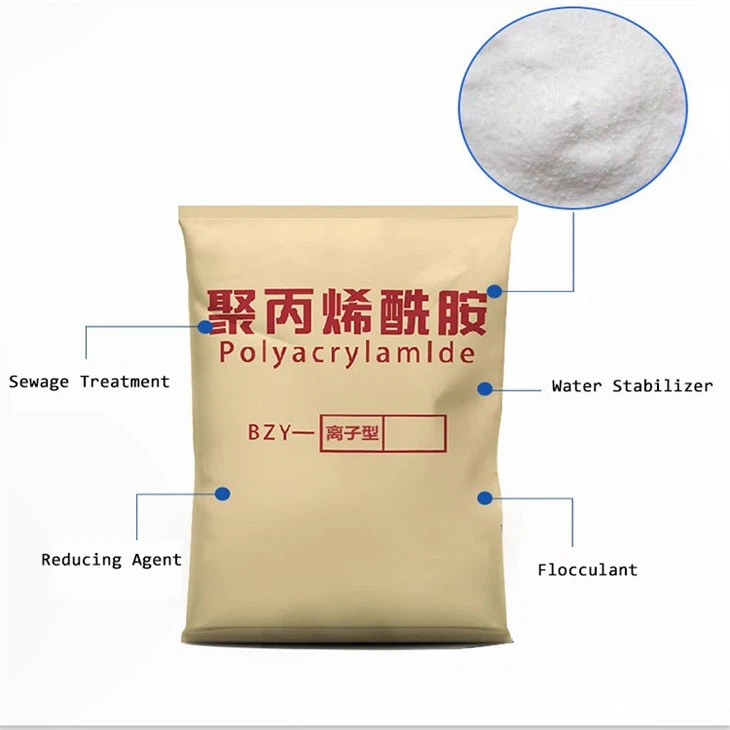
Cationic Partially Hydrolyzed Polyacrylamide (CPHPAM) is a water-soluble polymer that is commonly used in wastewater treatment, papermaking, and mining industries. It is a partially hydrolyzed polyacrylamide with cationic properties, which means it carries a positive charge.
CPHPAM is often used as a flocculant, which helps to gather and settle suspended particles in water or wastewater. It works by creating a bridge between the suspended particles, causing them to stick together and form larger clumps that are easier to remove through filtration or sedimentation. CPHPAM is effective in treating wastewater from a variety of sources, including municipal sewage, industrial wastewater, and agricultural runoff.
In addition to its use in wastewater treatment, CPHPAM is also used in the papermaking industry as a retention aid, which helps to improve the retention of pulp fibers and fillers in papermaking processes. It can also be used in the mining industry as a thickener, which helps to increase the viscosity of mining slurries.
Cationic Partially Hydrolyzed Polyacrylamide Test

Cationic Partially Hydrolyzed Polyacrylamide Application

Cationic Partially Hydrolyzed Polyacrylamide (CPAM) is a type of water-soluble polymer that is commonly used in a wide range of applications, including wastewater treatment, papermaking, mineral processing, and oil drilling.
In wastewater treatment, CPAM is used as a flocculant to help separate solid particles from water. It works by attracting and binding to negatively charged particles, causing them to come together and form larger clumps that can be more easily removed from the water.
In papermaking, CPAM is used as a retention aid to improve the retention of fibers and other solids in the paper pulp. This helps to improve the quality of the paper and reduce the amount of waste generated during the production process.
In mineral processing, CPAM is used as a flotation agent to help separate valuable minerals from unwanted materials. It can also be used as a dispersant to help prevent the clumping of particles in suspension.
In oil drilling, CPAM is used as a drilling fluid additive to help control the viscosity of the drilling mud and prevent the loss of fluid into the formation. It can also be used as a fluid loss control agent to help prevent the loss of drilling fluid into permeable formations.
Cationic Partially Hydrolyzed Polyacrylamide Factory


